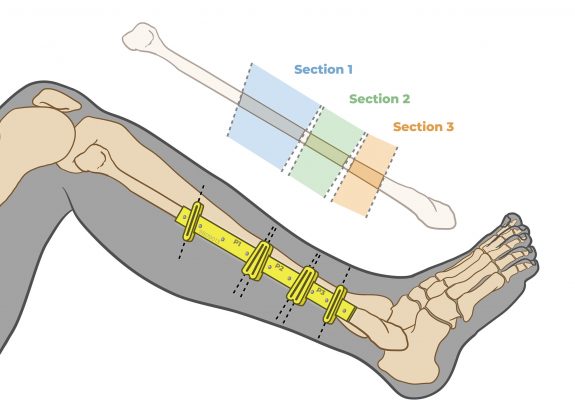
Surgical guides are used in bone reconstruction procedures to support planned cutting and alignment.
Guides Applications
Mandibular reconstruction
Fibula free flap procedures
Orthognathic surgery
Trauma-related reconstruction
Guide design considerations
Maintains shape during use
Designed for patient-specific anatomy
Compatible with standard sterilisation
Intended for controlled cutting and positioning
Surgical Guides Materials
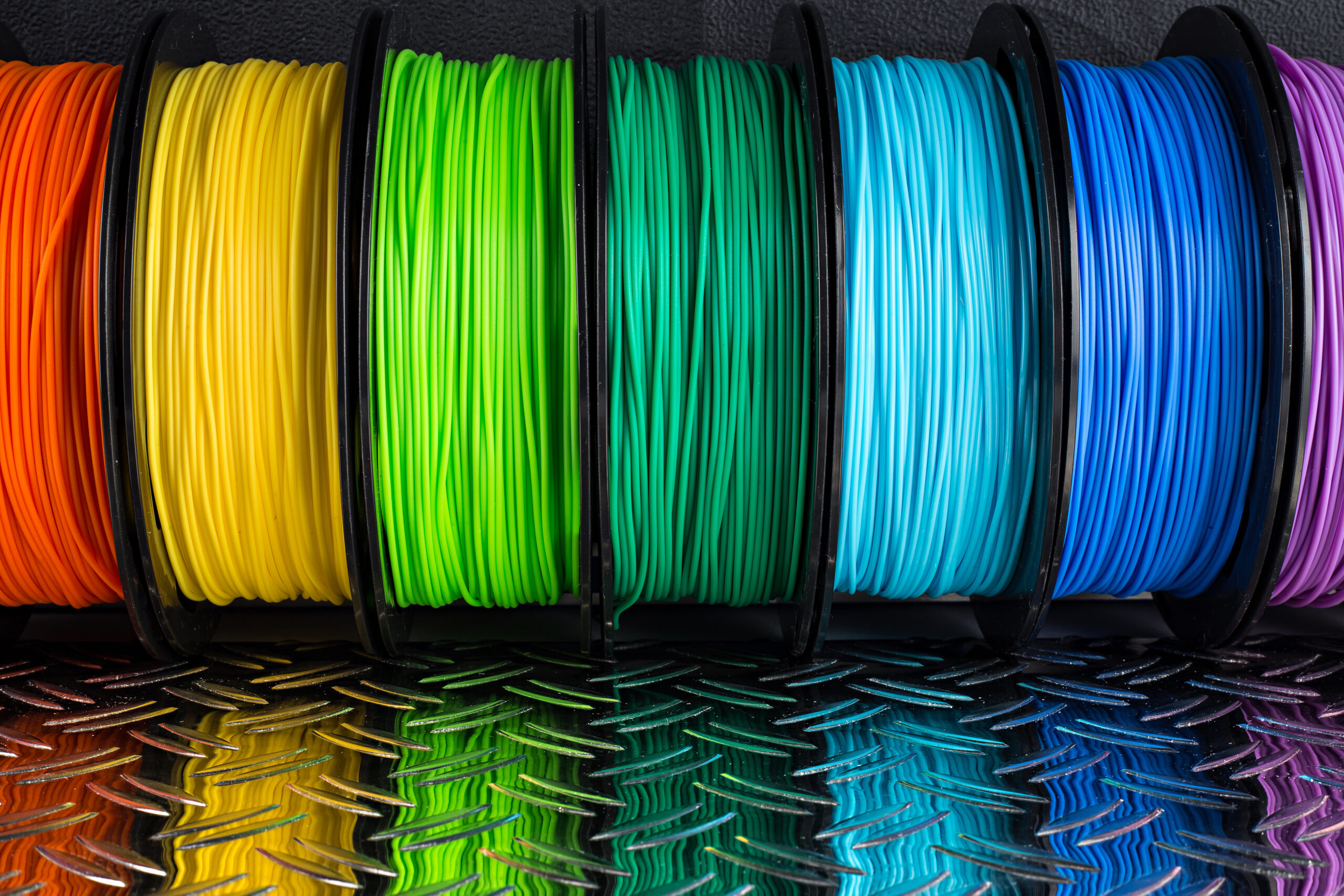
Surgical guides are developed to reflect the agreed plan and support its execution during surgery. They can be fabricated using materials such as PLA, PETG, or surgical resin, depending on the application.
Polylactic Acid (PLA)
PLA is a polymer commonly used for prototyping and surgical guides where temporary intraoperative use is intended. In this context, it is valued for ease of manufacture and dimensional stability during planning and trial fitting rather than long-term implantation.
Polyethylene Terephthalate Glycol Modified (PETG)
PETG is a thermoplastic polymer used for surgical guides where clarity, toughness, or handling characteristics are required. It can be manufactured reliably using additive processes and is selected based on how the guide will be used and handled during surgery.
PLA and PETG are used for tools and surgical guides where additive manufacturing is appropriate. These materials allow complex guide geometry to be produced reliably and handled safely during surgery. Sterilisation is selected to suit the material and the way the guide will be handled in surgery. Material choice is agreed during planning based on practical use.